



Insights & Ideas

Marketing
that moves
people.

Practical strategies, honest perspectives, and fresh thinking on digital marketing — written for businesses that want to grow.

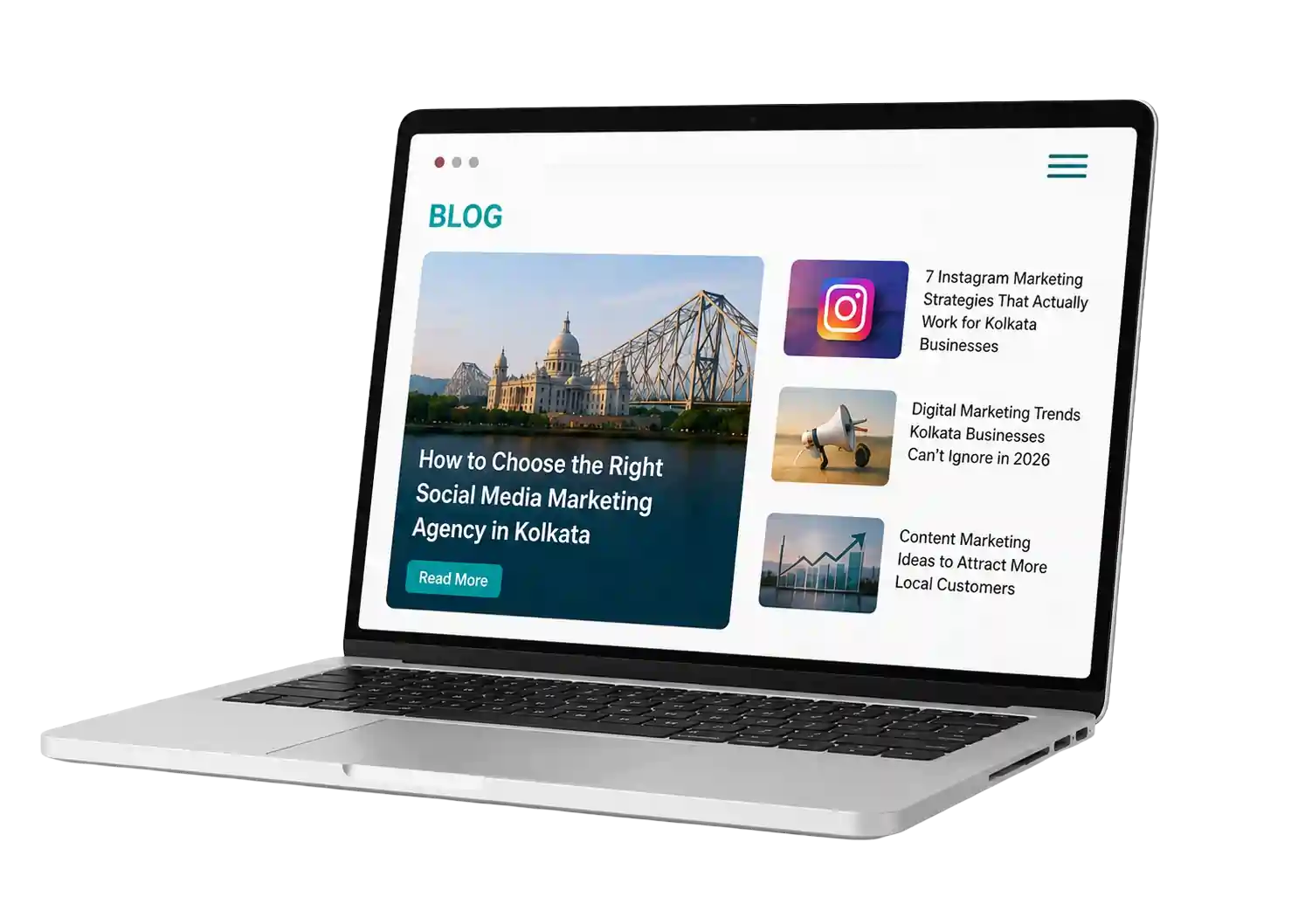
A laptop displaying the Pixy Social blog — digital marketing insights for Kolkata businesses
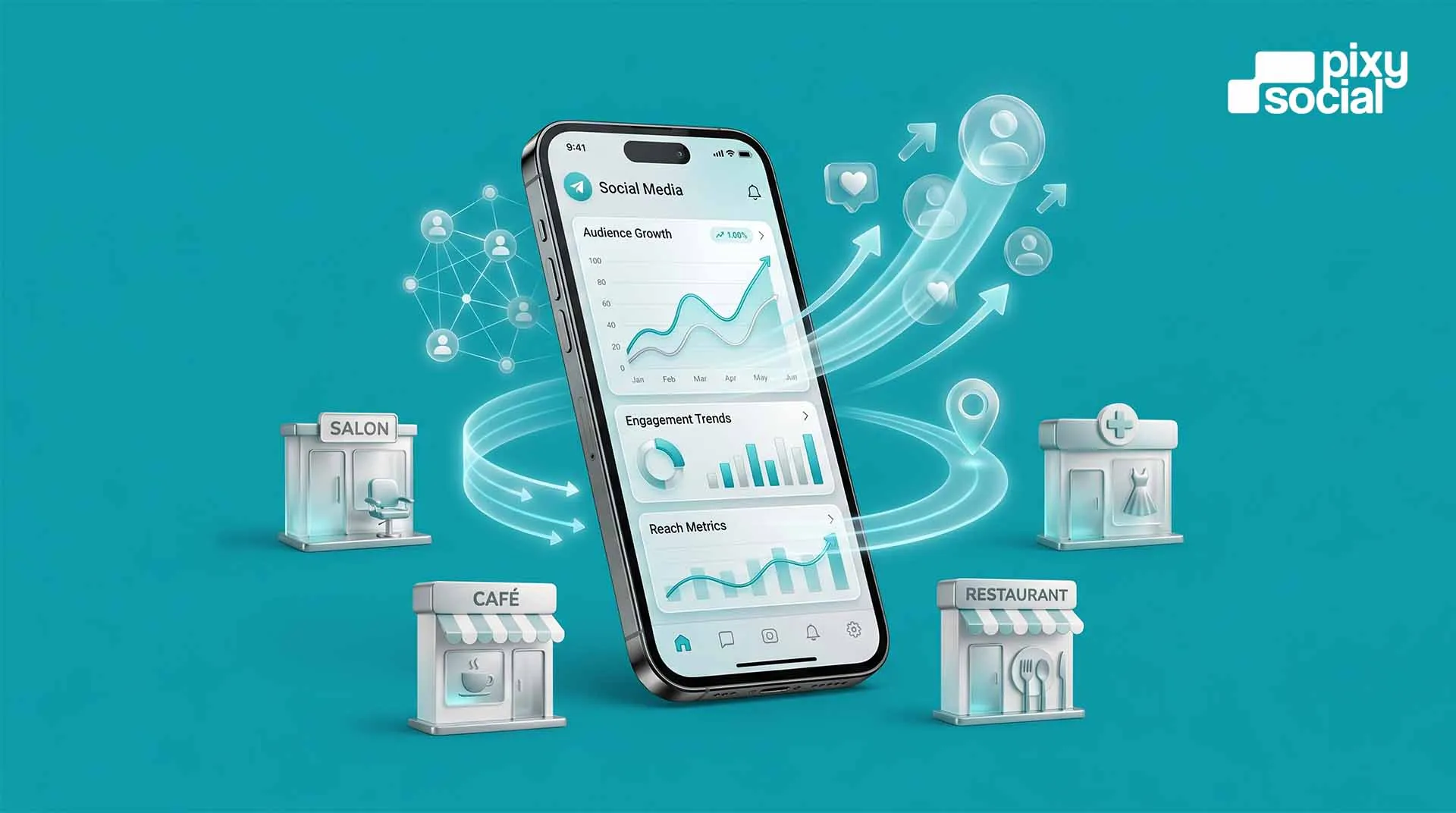
Why Social Media Marketing Is the Smartest Investment a Kolkata Brand Can Make — Pixy Social blog cover
Social Media 2026 4 min read

Why Social Media Marketing Is the Smartest Investment a Kolkata Brand Can Make

If you run a business in Kolkata and you're not investing in social media strategy, you're leaving money on the table. Consumers across Salt Lake, Park Street, and Gariahat discover brands on their phones every day.

How SMM Marketing Works in 2026: A Practical Guide for Kolkata Brands — Pixy Social blog cover
Social Media 2026 5 min read

How SMM Marketing Works in 2026: A Practical Guide for Kolkata Brands

A no-jargon breakdown of how social media marketing actually works in 2026 — and what Kolkata businesses need to know to make it work for them.

Why Most Brands Are Doing Digital Marketing Wrong and What to Do Instead — Pixy Social blog cover
Digital Marketing 2026 6 min read

Why Most Brands Are Doing Digital Marketing Wrong and What to Do Instead

The problem isn't that businesses are ignoring digital marketing — most are investing in it. The problem is fragmented effort producing fragmented results.

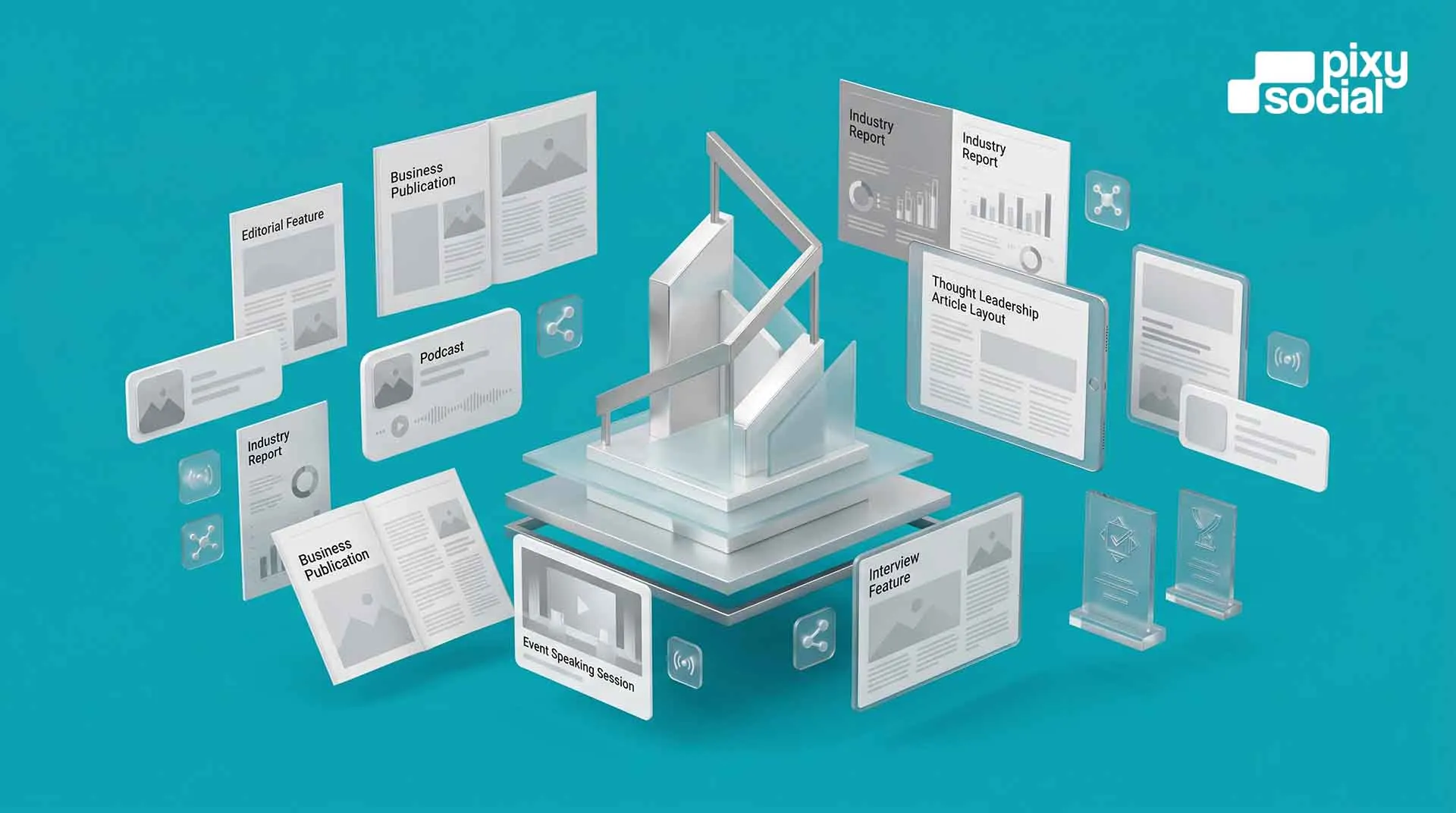
Why Public Relations Is the Most Underrated Growth Tool for Indian Brands — Pixy Social blog cover
Public Relations 2026 5 min read

Why Public Relations Is the Most Underrated Growth Tool for Indian Brands

Most brands think about PR only when something goes wrong. The ones that benefit most treat it as an ongoing investment, not an emergency response.

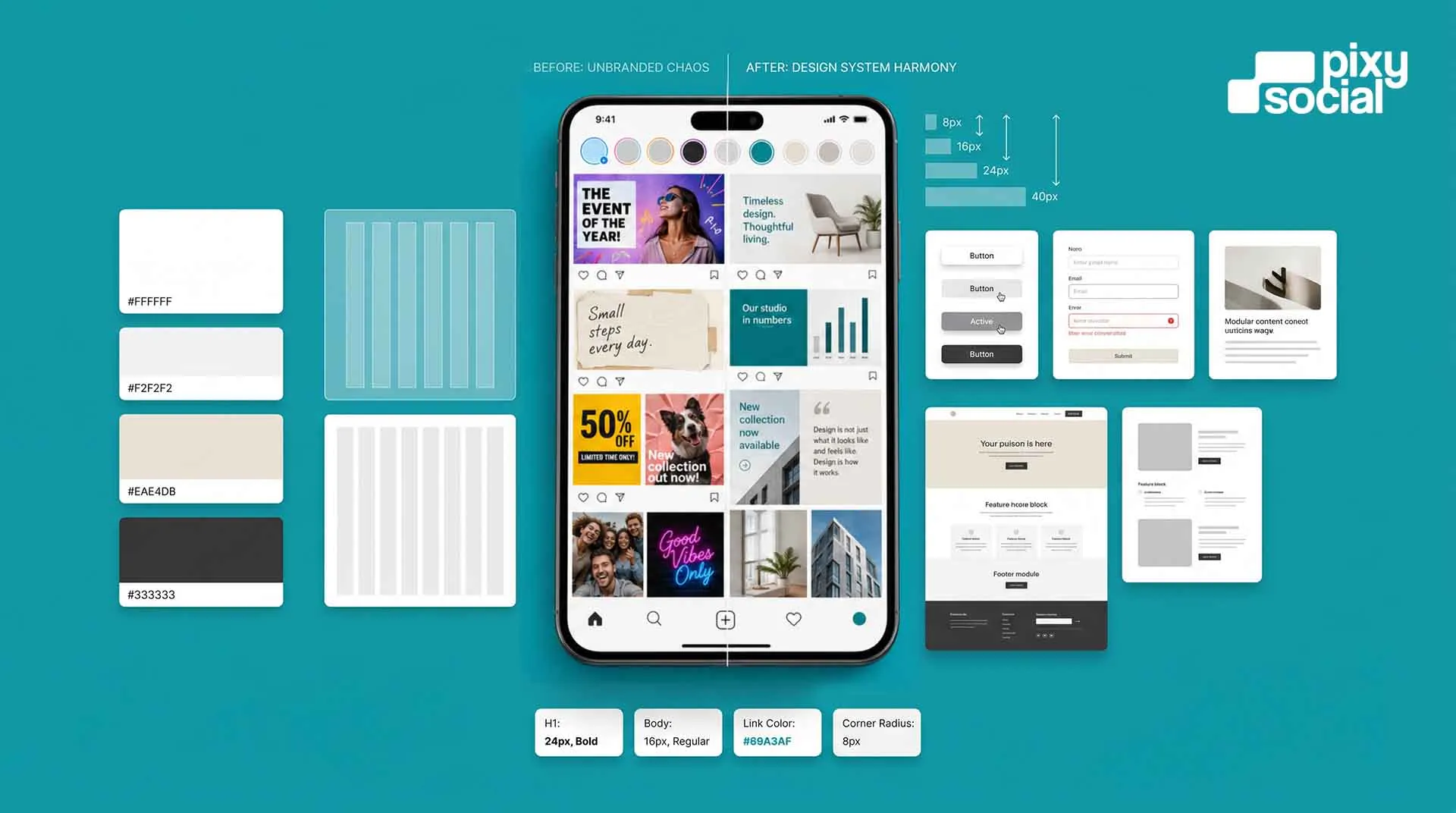
Why Most Small Businesses Accidentally Look Cheap Online — Pixy Social blog cover
Design 2026 4 min read

Why Most Small Businesses Accidentally Look Cheap Online

It's often not the logo. The problem sits a layer deeper — in the design system, or more accurately, the absence of one. Here's what that means for your brand.

The New Design Workflow: How Designers Are Using AI Without Losing Creativity — Pixy Social blog cover
Design 2026 4 min read

The New Design Workflow: How Designers Are Using AI Without Losing Creativity

The best designers aren't fighting AI — they're directing it. The ones struggling are those who either refuse to touch it or hand everything over to it. Neither extreme produces good work.

Why Social Media Marketing Is the Smartest Investment a Kolkata Brand Can Make

Why Social Media Marketing Is the Smartest Investment a Kolkata Brand Can Make

If you run a business in Kolkata and you are not investing in social media strategy, you are leaving money on the table every single day. Consumers across Salt Lake, Park Street, Gariahat, New Town, and Behala discover brands on their phones long before they ever walk through a door or visit a website. The question is no longer whether you need social media marketing. The question is whether you are doing it well enough to outpace the brand two lanes down from you that already figured this out.

Kolkata's business landscape in 2026 has a specific character that national agencies rarely understand. This is a city with intensely local buying habits, strong community word-of-mouth, and a consumer base that is simultaneously deeply rooted in neighbourhood identity and extremely online. A restaurant in Shyambazar does not need to beat a brand in Bengaluru. It needs to be the name that comes up when someone in Shyambazar picks up their phone and searches for dinner tonight. Social media is the engine that puts you in that conversation — and keeps you there.

Social Media and Marketing: One Strategy, Not Two

Most businesses still treat social media and marketing as separate functions managed by different people with different budgets and different goals. That thinking is costing them. The brands winning right now — the ones consistently growing followers, generating enquiries, and converting those enquiries into revenue — have collapsed the wall between the two. Social media is not a distribution channel for marketing. It is where marketing happens.

When your organic content, your paid campaigns, your influencer partnerships, and your community management all operate from a single strategy, each one amplifies the others. A post that performs well organically becomes a paid ad with a warmer audience. A micro-influencer campaign drives followers who your retargeting campaigns then convert. Your community management data tells your content team what the audience actually cares about rather than what the brand assumes they do. This is what an integrated social media and marketing strategy looks like in practice — and it is the model Pixy Social builds for Kolkata brands.

Facebook Advertising Management for Local Growth

For businesses operating in Kolkata, Facebook advertising management remains one of the highest-return digital channels available. Meta's geo-targeting infrastructure lets you reach people not just in Kolkata but in specific localities — Alipore, Tollygunge, EM Bypass, Newtown Action Area — with messages calibrated to where they live, what they earn, and what they have already engaged with. That level of specificity is what separates a well-managed paid campaign from one that burns money.

The most common mistake in Facebook advertising management is treating campaigns as set-and-forget. A local boutique in South Kolkata might launch a campaign for a seasonal sale, set a daily budget, and then check the results two weeks later wondering why the cost per result is four times higher than expected. The reason is almost always the same: audiences fatigue, creative stops performing, and without active management, the algorithm optimises for the wrong signals. Pixy Social's paid team runs campaigns as live experiments. Targeting is adjusted based on early data. Creative is rotated before fatigue sets in. Spend is shifted toward what is working and away from what is not. The difference in cost-efficiency between a managed and an unmanaged campaign, over a month, is substantial.

Beyond acquisition campaigns, Facebook advertising management for Kolkata brands increasingly means retargeting architecture. Building custom audiences from website visitors, video viewers, Instagram engagers, and customer lists — and then sequencing different messages to each of them — is where the real returns live. A consumer who watched forty-five seconds of your brand video last week should not be seeing the same introductory ad as someone who has never encountered you before. Retargeting done properly makes your ad spend work harder at every stage of the funnel.

Facebook Creator Studio and Consistent Organic Presence

On the organic side, Facebook Creator Studio is the backbone of a disciplined social media posting workflow. It handles scheduling across both Facebook and Instagram, tracks post performance, manages the inbox, and surfaces audience insights — all from one dashboard. For a brand juggling content creation, client work, and daily operations, the ability to plan and schedule a full week of posts in a single sitting is not a small thing. Consistency is the single most important variable in organic social media growth, and Creator Studio is what makes consistency achievable at a human scale.

The brands in Kolkata with the most engaged organic followings are almost never the ones posting the most. They are the ones posting consistently, at the right times, with content that has been planned rather than improvised. A social media posting calendar built around your audience's active hours, your business's seasonal rhythms, and a balanced mix of content types — educational, behind-the-scenes, promotional, community-driven — outperforms a sporadic burst-and-silence approach every time. Creator Studio is the tool that turns that calendar from a plan into a habit.

Instagram Influencers and the Power of Local Trust

No part of social media marketing in Kolkata is more misunderstood than influencer partnerships. Most businesses approach it backwards — looking for the largest follower count they can afford and hoping the numbers translate into business results. They rarely do, and the reason is simple: national or large-scale Instagram influencers have audiences that are geographically and demographically diffuse. A fashion influencer with four hundred thousand followers based in Mumbai might have fewer than three thousand followers who live in Kolkata, care about local brands, and have the spending power relevant to your business. That is not a useful audience for a Kolkata brand trying to drive foot traffic to a Salt Lake location or online orders from the city.

Kolkata micro-influencers — creators with between five thousand and seventy-five thousand highly engaged local followers — deliver something that mass reach cannot: genuine community trust. When a respected Kolkata food blogger recommends a new restaurant in Ballygunge, their followers are not just seeing a post. They are receiving a recommendation from someone whose taste they have followed and trusted for years. That credibility is worth more per rupee spent than almost any other channel available to a local business. Pixy Social builds influencer partnerships starting with audience demographics and engagement data, not aesthetics and follower counts.

The other dimension of Instagram influencer strategy that local brands consistently underuse is content repurposing. When a creator produces genuine, high-quality content about your brand, that content has value well beyond the original post. With the right licensing agreement in place, that creator content becomes material for your own feed, your paid ad creative, your website, and your email marketing. The best influencer campaigns produce assets that keep delivering value for months after the initial post.

Growing Social Followers Who Actually Convert

There is a meaningful difference between growing a social media following and growing a social media following that converts into customers. Follower count, as a standalone metric, is largely meaningless. A brand with eight thousand highly engaged, locally relevant followers in Kolkata will consistently outperform a brand with eighty thousand passive, geographically scattered followers on every metric that actually matters: enquiries, bookings, sales, and referrals.

Growing the right followers requires understanding who your best customers actually are and creating content that consistently speaks to them. It requires engaging with comments and messages in a way that feels human rather than automated. It requires participating in local conversations — Kolkata events, neighbourhood topics, city-specific trends — rather than operating like a brand broadcasting into a void. And it requires patience, because the compounding nature of community-driven social media growth means the results in month three look very different from the results in month one, and most brands give up before they reach month three.

Why Kolkata Brands Have a Specific Opportunity Right Now

Kolkata is in an interesting competitive moment. Compared to Delhi and Mumbai, the average Kolkata business has been slower to invest in sophisticated social media marketing. That gap is closing fast — the brands in this city that are getting it right are pulling further ahead of the ones still treating social media as an afterthought — but it has not closed yet. For a Kolkata brand willing to invest properly in social media strategy today, the return on that investment is higher than it will be in two years once the market catches up.

The brands that look back at 2026 as a turning point will be the ones that committed to a real social media presence this year rather than running experimental campaigns with inconsistent effort. The infrastructure that makes that presence possible — the strategy, the content systems, the paid framework, the influencer relationships — takes time to build. Starting later means starting further behind in a market where the early movers are already compounding their advantage.

Pixy Social is a Kolkata-based social media and digital marketing agency that builds integrated strategies for brands that want to grow in this city. From Facebook advertising management and influencer partnerships to organic content and community building — we treat social media as a business channel, not a content calendar.

Start the conversation →
How SMM Marketing Works in 2026: A Practical Guide for Kolkata Brands

How SMM Marketing Works in 2026: A Practical Guide for Kolkata Brands

The rules of SMM marketing have changed and most brands have not caught up. Posting product photos with a caption barely registers today. Brands growing on social network platforms have fundamentally adapted their approach — not just the content they produce but the entire structure behind it. This guide covers what actually works in 2026 for businesses in Kolkata, and why the gap between brands that understand this and brands that do not is widening every quarter.

What Social Media Marketing Really Means

At its core, social media marketing is the practice of using platforms to build awareness, attract customers, and drive action. That definition has not changed. What has changed is what it takes to do it well. Marketing through social media today means content creation, community management, paid amplification, and influencer partnerships working together — not independently, not managed by different people with different priorities, but operating as a single integrated system.

Brands that integrate these functions get compounding growth. Every piece of organic content that performs well becomes a signal for paid creative. Every influencer campaign that drives new followers feeds into a retargeting pool. Every community management interaction surfaces audience insight that sharpens the next content cycle. Brands that keep these functions separate get fragmented results — and they pay for the same customer multiple times across different channels without ever building the kind of cumulative brand presence that makes growth self-sustaining.

The structural shift required here is not a large one in terms of budget, but it is significant in terms of mindset. It means treating social media not as a content calendar to be filled but as a marketing channel to be optimised — with performance data, clear objectives at each funnel stage, and a consistent feedback loop between what you spend and what you learn.

Why Social Media Drives Real Business Results

The average Indian urban consumer spends close to three hours a day on social media. In Kolkata's twenty-five to forty-five age group, that number is even higher. Social media and marketing let you reach that audience with a precision that traditional channels simply cannot match. A newspaper advertisement reaches whoever picks up that newspaper. A social media campaign reaches exactly the people you define — by age, location, interest, behaviour, purchase intent, and prior interaction with your brand.

Media marketing through social platforms lets you test messages in real time, optimise spend based on live performance data, and build brand recall without wasting budget on the wrong people. A hoarding in New Town is seen by everyone who drives past it, regardless of whether they are your customer. A Meta campaign targeting residents of New Town aged twenty-five to forty-five who have engaged with similar brands in the past thirty days is seen almost exclusively by people who could plausibly become your customer.

That targeting advantage compounds over time. The longer your brand has been active on social media and building audience data, the more accurately you can define and reach the right people — and the lower your cost per result tends to be. Brands in Kolkata that have been running disciplined social media marketing for two or three years consistently outperform newer entrants not because they spend more but because they have better data, better-defined audiences, and a warmer base of people who already recognise the brand.

Facebook Advertising Management: The Paid Foundation

Serious growth requires serious Facebook advertising management. Meta's platform lets Kolkata businesses run hyper-local campaigns targeting specific pin codes, income brackets, and interests with a level of granularity that no other mass-market advertising channel offers. A salon in Ballygunge can reach women aged twenty-two to forty-five within five kilometres. A food brand can retarget visitors who browsed the menu but did not place an order. A coaching institute in Salt Lake can reach parents of students in Class 10 within a defined catchment area. That specificity is what makes SMM investment defensible as a business decision.

At the foundation of effective Facebook advertising management is audience architecture — the deliberate layering of cold, warm, and hot audiences that moves people through the funnel rather than showing every prospect the same introductory message. Cold audiences, built from demographics and interests, create awareness. Warm audiences, built from video viewers, page engagers, and website visitors, receive consideration-stage messaging. Hot audiences — people who have added to a cart, visited a contact page, or engaged repeatedly — receive conversion-focused creative. Each layer requires different content, different copy, and different calls to action.

The single most common mistake in paid social among Kolkata businesses is running campaigns without an active management process. A campaign launched and left unattended for three weeks will almost always end up costing more per result in week three than it did in week one. Audiences fatigue. Creative loses novelty. The algorithm's initial learning phase produces data that needs to be acted on, not ignored. Active management — reviewing performance data several times a week, rotating creative before fatigue sets in, adjusting targeting based on what the data shows, and scaling spend on what is working — is what separates a campaign that grows more efficient over time from one that burns budget on diminishing returns.

Lookalike audiences are another layer most Kolkata businesses are not using effectively. Once you have a customer list of even a few hundred people, Meta can find users across the platform who share the same characteristics — behavioural patterns, interests, demographic profiles. In a city like Kolkata where the addressable market for many businesses is geographically concentrated, lookalike audiences built from real customer data tend to be unusually accurate and significantly cheaper to convert than cold interest-based targeting.

Facebook Creator Studio for Smarter Content Management

On the organic side, Facebook Creator Studio is one of the most underused tools available to brands managing a presence across Facebook and Instagram. It handles scheduling, analytics, inbox management, and monetisation settings across both platforms from a single dashboard. For brands serious about consistent social media posting, mastering Creator Studio is not optional — it is the infrastructure that makes consistency achievable without consuming the entire working week.

The consistency problem is the most significant organic social media challenge for most Kolkata businesses. Every brand owner understands the need to post regularly. The operational reality of running a business means that social media posting is the first thing to slip when things get busy. And once a posting cadence breaks, it is genuinely difficult to rebuild. Creator Studio solves this through batched scheduling: a content manager can plan, write, and schedule two or three weeks of posts in a single focused session, then let the tool handle distribution automatically. The brand maintains its presence even when the team is heads-down on other priorities.

The analytics layer in Creator Studio also goes significantly deeper than the insights available in the standard Instagram or Facebook apps. It surfaces post reach, engagement rate by format, audience demographic breakdowns, follower growth curves, and optimal posting times based on when your specific audience is most active — not generic best-practice windows that apply to everyone. Brands that review this data fortnightly and adjust their content strategy accordingly grow audiences measurably faster than brands that post based on instinct and check the likes occasionally. The data is available to every brand using the platform. Using it consistently is the differentiator.

Instagram Influencers and Building Social Followers

Among all SMM marketing levers, Instagram influencers build trust the fastest — and are the most frequently misused. The mistake most Kolkata brands make is approaching influencer selection as a reach-buying exercise: find the largest audience you can afford, pay for a post, and count the likes. This consistently underperforms because it targets the wrong variable entirely.

Social followers only matter when they are the right people. A Kolkata food influencer with thirty thousand engaged local followers delivers better results for a restaurant than a national creator with five hundred thousand passive ones. The reason is straightforward: the smaller creator's audience is local, food-interested, and has been following Kolkata-specific content for months or years. They trust the recommendation. The national creator's half-million followers are geographically diffuse, behaviourally varied, and have no particular reason to act on a recommendation for a restaurant in Ballygunge. Reach without relevance is not an asset. It is noise.

Pixy Social's influencer matching for Kolkata brands starts with audience data, not aesthetics. We look at where a creator's followers are located, how actively they engage with content versus simply scrolling past it, what the demographic breakdown looks like in terms of age and gender, and whether their existing brand partnerships are consistent with the positioning of the client. A creator whose recent sponsored posts have been for fast-fashion brands and energy drinks is not the right partner for a premium homewares business, regardless of follower count. The goal is not to find creators who look good. It is to find creators whose audience is, as specifically as possible, your target customer.

There is a second dimension to influencer strategy that creates significant long-term value: content licensing. Creator-produced content — particularly short-form video and lifestyle photography — consistently outperforms brand-produced creative in paid advertising environments because it reads as authentic rather than promotional. When an influencer campaign is structured with content licensing rights built in from the start, the brand acquires not just the reach of the original post but a library of high-performing creative assets that can be deployed in paid campaigns for months afterward. This transforms a one-time influencer spend into an ongoing creative investment with a compounding return.

Putting It All Together

Good SMM in 2026 is paid and organic working in sync. It is Instagram influencers amplifying content that already performs organically. It is Facebook advertising management retargeting your most engaged audiences with messages designed for where they are in the funnel, not where you wish they were. It is Facebook Creator Studio keeping your social media posting schedule tight so your brand stays visible during the weeks when new content is not being produced. And it is all anchored by a brand voice your audience recognises instantly across every channel and every format.

The brands in Kolkata getting the best return from SMM are not the ones spending the most. They are the ones where every layer of the system is connected. Their organic content data informs their paid creative. Their influencer partnerships produce assets that feed both organic and paid. Their community management surfaces the questions and objections that shape the next content cycle. Their paid performance data tells their organic team which messages are actually resonating with the right audience.

This is what SMM marketing as a system looks like — not a collection of tasks to be checked off, but an integrated operation where each element makes every other element more effective. Building that system takes deliberate effort and time. But once it is running, the compounding effect means the results in month six look nothing like the results in month one. Pixy Social exists to build that system for Kolkata brands and manage it as a live operation — not a set-up-and-leave project, but an ongoing engine that gets sharper every week.

Ready to build a social media strategy that actually works as a system? Pixy Social works with Kolkata brands to integrate paid, organic, and influencer channels into one coherent growth engine — and manages it as a live operation, not a one-time project.

Let's talk about your SMM strategy →
Why Most Brands Are Doing Digital Marketing Wrong and What to Do Instead

Why Most Brands Are Doing Digital Marketing Wrong and What to Do Instead

The problem with digital marketing today is not that businesses are ignoring it. Most are investing in it. The problem is that most are doing it in pieces — running ads here, posting on social there, occasionally sending an email — with no single strategy connecting all of it. Fragmented effort produces fragmented results.

What Digital Marketing Actually Means

Done properly, digital marketing is not a collection of tactics. It is a system where every channel reinforces the others. Your SEO builds long-term organic visibility. Your content marketing establishes authority and feeds that visibility. Your paid campaigns capture demand that your content creates. Your email nurtures the leads your ads bring in. When these work together, growth compounds. When they operate in silos, you pay for the same customer multiple times across different channels.

SEO: The Channel That Keeps Paying

Of all digital marketing channels, SEO has the best long-term return on investment and the worst short-term patience requirement. Most businesses give up on it before it pays off. That is a mistake. A business in Kolkata that ranks on the first page of Google for its core service keywords does not pay per click, per impression, or per view. It earns that traffic every single day. Building that position takes time and the right SEO strategy, but the brands that commit to it consistently are the ones that stop being dependent on ad spend to stay visible.

Content Marketing: Building Trust Before the Sale

The role of content marketing is to answer the questions your potential customers are already asking before they are ready to buy. A blog post that solves a real problem, a video that explains something confusing, a guide that saves someone time: these build the kind of trust that a promotional ad cannot. By the time a reader who found you through content is ready to make a purchase decision, they already feel like they know your brand. That is an enormous conversion advantage and it costs far less than most brands assume.

Paid Advertising: Speed With Precision

Where SEO and content marketing build slowly, paid advertising moves fast. Performance marketing through Meta, Google, and programmatic channels lets you put a specific message in front of a specific audience within hours of deciding to. For Kolkata businesses, this means you can target by pin code, by interest, by behaviour, and by purchase intent with a level of precision that traditional media never offered. The catch is that it requires active management. A campaign left running without optimisation wastes budget. Pixy Social's paid team treats every campaign as a live experiment, adjusting creative, targeting, and spend daily based on what the data shows.

Email Marketing: The Most Underused Channel

In an era of shrinking organic reach and rising ad costs, email marketing remains one of the highest-ROI channels available. You own your list. No algorithm decides how many of your subscribers see your message. A well-managed email programme that delivers genuine value — useful content, early access, honest updates — builds a direct relationship with your audience that no social platform can replicate or take away.

Why an Integrated Approach Always Wins

The brands getting the best results from digital marketing are not the ones spending the most. They are the ones connecting the dots. Their SEO strategy informs their content marketing calendar. Their content marketing feeds their email marketing sequences. Their paid advertising retargets people who engaged with their content. Their performance marketing data sharpens their organic messaging. Everything talks to everything else.

Pixy Social approaches digital marketing as a single integrated strategy, not a menu of services. We audit what you already have, identify the gaps, and build a connected system that scales with your business.

Get a free audit →
Why Public Relations Is the Most Underrated Growth Tool for Indian Brands

Why Public Relations Is the Most Underrated Growth Tool for Indian Brands

Most brands think about public relations only when something goes wrong. A bad review spreads, a crisis lands in the inbox, and suddenly everyone wants a PR strategy. That is the wrong time to build one. The brands that benefit most from PR are the ones that treat it as an ongoing investment rather than an emergency response.

What Public Relations Actually Does

At its core, public relations is reputation management at scale. It is the discipline of shaping how your brand is perceived by the people who matter most: your customers, your investors, your industry peers, and the press. Unlike paid advertising, which puts your message in front of people who may or may not trust it, PR earns that trust through third-party validation. A journalist writing about your brand, a podcast featuring your founder, an industry publication citing your work as a case study — these carry a credibility that no ad budget can buy directly.

The Difference Between PR and Advertising

The simplest way to understand the difference is this: advertising is what you say about yourself, and public relations is what others say about you. Both matter, but they do different jobs. Advertising drives immediate action. PR builds the long-term reputation that makes advertising more effective. A consumer who has read a positive profile of your brand in a trusted publication is far more likely to convert when they see your ad later. The two work best when they are planned together rather than treated as separate budgets.

Media Relations: Getting Your Brand Into the Right Conversations

The most visible part of public relations is media relations — the work of building relationships with journalists, editors, and content creators who cover your industry. This is not about sending press releases into the void and hoping someone picks them up. It is about understanding what each journalist covers, what their audience cares about, and how your brand story genuinely intersects with that. A well-pitched story to the right person at the right time can generate coverage worth more than a months-long ad campaign. Pixy Social has built those relationships across print, digital, and broadcast media in India, which means your story reaches the desks where it will actually be read.

PR for Small and Mid-Sized Brands in Kolkata

One of the most common misconceptions about PR is that it is only for large companies with large budgets. That is not true and it has not been true for several years. The rise of digital media, regional publications, podcasts, and creator-led platforms has opened up more opportunities for smaller brands to earn meaningful coverage than ever before. A Kolkata-based food brand, a homegrown fashion label, a fintech startup — all of these have stories worth telling. The question is whether someone is telling them well and putting them in front of the right people.

Crisis Communication: When It Goes Wrong

No conversation about public relations is complete without addressing crisis communication. Every brand, at some point, will face a moment where public perception shifts quickly and not in its favour. How a brand responds in that moment — how fast, how honestly, and how consistently across channels — determines whether the damage is temporary or lasting. A prepared PR strategy includes a crisis framework built before it is needed: clear spokespersons, pre-agreed response protocols, and a communication chain that does not slow down when speed matters most.

Pixy Social offers public relations as a full-service capability alongside social media, content, and paid advertising. If your brand has a story worth telling and no one is telling it yet, that is exactly where we start.

Tell your story →
Why Most Small Businesses Accidentally Look Cheap Online

Why Most Small Businesses Accidentally Look Cheap Online

It is often not the logo. Most small business owners who feel their brand looks off have already spent real money on a logo — sometimes several iterations of one. The logo is rarely the problem. The problem sits a layer deeper, in the design system, or more accurately, in the absence of one. And in a city like Kolkata, where the consumer base is increasingly design-literate and the visual noise on every social feed is relentless, the absence of a design system is one of the most expensive mistakes a brand can make without realising it.

What a Design System Actually Is

A design system is the set of rules that governs how your brand looks everywhere it shows up. Your website. Your Instagram grid. Your WhatsApp business profile. Your proposals and invoices. Your packaging. Your storefront signage. Your ad creatives. The cover image on your Facebook page. A design system covers your colour palette and the specific hex codes that define it, your typography choices and the rules for when each typeface is used, your spacing and layout principles, your image and photography style, and the visual language that ties all of it together into something a customer would recognise as yours even if your logo was removed.

Without a design system, every new piece of content becomes a decision made from scratch. And decisions made from scratch under time pressure, by whoever happens to be available, using whatever tools and templates are nearby, accumulate into inconsistency. Inconsistency, more than any single bad design decision, is what makes a brand look cheap online. It signals to a viewer — at a subconscious level that happens faster than conscious thought — that no one is in charge of how this brand looks. And if no one is in charge of how the brand looks, the implication is that no one is particularly in charge of the business either.

The Specific Patterns That Signal an Unprofessional Brand

There are a handful of visual habits that consistently give small businesses away to anyone who knows what to look for. Each one seems minor in isolation. Together, they create an impression that is difficult to overcome, even for businesses with excellent products or services.

Inconsistent typography is one of the most common signals. Using three or four different fonts across a website, social media posts, and print materials — sometimes within a single post — communicates a lack of visual discipline that most consumers will not consciously identify but will absolutely feel. The brand feels chaotic and unresolved. Contrast this with a brand that uses two typefaces consistently — one for headings, one for body text — with clear rules about when each appears. That consistency creates a sense of intentionality that lifts the brand's perceived quality substantially.

Inconsistent colour usage is the second most common issue. Many small businesses in Kolkata have a logo colour, but no defined colour palette. The result is that every new design element — a social media post, a banner ad, a business card, a product label — introduces a slightly different shade because no one has the hex codes and everyone is colour-matching by eye. Over time, the brand's visual identity becomes a spectrum rather than a system. Customers who encounter the brand across multiple touchpoints feel a vague sense of dissonance without knowing why.

Stock imagery that does not belong together is a third signal. Many small businesses assemble their visual content from multiple stock libraries, choosing images based on what is available for free or cheap rather than on what fits a defined visual style. The result is a feed or website that feels like a collage — some images are warm and lifestyle-oriented, others are cold and corporate, others are illustrated, others are photographic. Again, no single image is necessarily a problem. The lack of a coherent visual logic is the problem, and it is immediately legible to a consumer deciding whether this brand is worth their attention.

For businesses in Kolkata, these issues matter more than businesses in smaller markets might expect. The city's twenty-five to forty-five demographic is genuinely design-literate. They have spent years consuming content from well-resourced national and international brands. Their visual standards have been set by those brands, whether they are conscious of it or not. When they land on a local business's Instagram grid or website and the visual identity feels inconsistent or unresolved, most of them leave. They do not stop to wonder whether the product is good or the service is worth it. They have already made a decision, and it happened in under three seconds.

What Good Brand Design Actually Requires

A functional brand design foundation does not require an expensive agency engagement or a months-long brand strategy project. It requires defining a small number of elements clearly and then applying them consistently. That is the entire job. The complexity people associate with brand design usually comes from not having done it systematically, which leads to endless renegotiation of decisions that should have been made once.

At minimum, a brand design system for a small or mid-sized Kolkata business needs the following. A colour palette of two to four colours with exact hex codes documented — not colour names, not screenshots, actual hex codes that can be entered into any design tool to produce exactly the right shade every time. Two typefaces with clear usage rules: one for headings and display text, one for body text and captions, with guidance on sizing and weight. A set of image guidelines covering the visual mood, typical subjects, and editing style that defines what on-brand photography looks like — not just what to avoid, but what to aim for. And a template library for the content formats your brand produces most often: social media posts, story frames, email headers, proposal covers, whatever appears most frequently in your marketing.

These are not luxuries reserved for brands with large budgets. They are the baseline infrastructure of a brand that looks like it knows what it is doing. And they are achievable for almost any business willing to spend a focused effort on getting them right once rather than making the same visual decisions badly over and over again.

The Cost of Not Having a Design System

The most common objection to investing in brand design infrastructure is budget. A design system costs money to develop properly. What most small business owners do not account for is the cost of not having one — which is real, ongoing, and compounding. Every freelancer, intern, or vendor who touches your brand without a reference document will make their own visual decisions. Some of those decisions will be fine. Many will be subtly wrong. All of them will require correction, briefing, or rework. The time and money spent on that constant course-correction, measured over a year, almost always exceeds what a one-time investment in proper brand guidelines would have cost.

There is also a less tangible but equally real cost: the cumulative effect on how your brand is perceived. Every inconsistent visual touchpoint erodes the authority and credibility you are trying to build. And in a competitive market like Kolkata — where a potential customer might encounter your brand on Instagram, visit your website, see a WhatsApp forward from a friend, and pass your store signage all before making a decision — those touchpoints add up. A brand that looks consistent and intentional at every one of those encounters builds trust incrementally. A brand that looks inconsistent loses it at roughly the same rate.

Where to Start If Your Brand Design Is Inconsistent Right Now

The most useful first step for a Kolkata business that recognises this problem in its own brand is a visual audit. Before changing anything, document what you have. Collect every current brand touchpoint — your logo files, your social media posts from the last three months, your website screenshots, your printed materials, your ad creatives. Lay them side by side and look honestly at whether they feel like they come from the same brand. If they do not, the audit will show you exactly where the inconsistencies are concentrated, which tells you where to focus the fix.

The second step is consolidation: defining the elements that should be fixed going forward and documenting them in a single reference file that anyone who works on your brand can access. This does not need to be a hundred-page brand book. It can be a single Canva document or a PDF with the hex codes, the font names, the image style direction, and three or four annotated examples of what on-brand content looks like. That document becomes the anchor for every future design decision, and it eliminates the need to renegotiate those decisions every time they come up.

The third step — which is where the real transformation happens — is applying the system consistently over time. A brand design system that exists as a document but is not followed consistently is nearly as ineffective as not having one. The goal is to make the system the default, so that producing on-brand content becomes the path of least resistance rather than an extra effort.

At Pixy Social, we treat brand design as infrastructure, not decoration. Every client engagement starts with an audit of existing visual assets and an honest conversation about what is working and what is creating friction. We build the system first — the colour palette, typography, image guidelines, and template library — so that everything that follows has a foundation to stand on. If your brand looks inconsistent online and you want to fix it properly rather than patch it, we would like to talk.

Fix your brand system →
The New Design Workflow: How Designers Are Using AI Without Losing Creativity

The New Design Workflow: How Designers Are Using AI Without Losing Creativity

The best designers are not fighting AI in design. They are directing it. The ones struggling are the ones who either refuse to touch it or hand everything over to it. Neither extreme produces good work.

What AI Actually Does Well in a Design Workflow

Used properly, AI design tools are exceptional at the parts of the design workflow that consume time without requiring taste. Generating reference imagery for mood boards. Producing rapid variations of a layout so a designer can evaluate directions in minutes rather than hours. Writing first-draft copy for ads or captions that a human then sharpens. Resizing assets across formats. Removing backgrounds. These are tasks that used to eat half a working day. Now they take minutes, which means the designer has more time for the decisions that actually require judgment.

Where Human Creativity Remains Irreplaceable

What AI in design cannot do is understand context the way a person does. It does not know that a particular colour choice will feel tone-deaf to a specific cultural audience. It does not know that a client's brand has a complicated history with a certain visual style. It does not know when something technically correct is emotionally wrong. Creative design at its best is a series of nuanced calls made by someone who understands the brand, the audience, and the moment. That judgment is not something a model generates. It is something a designer earns.

The strongest graphic design work coming out of studios right now sits at the intersection of both. AI handles the volume and the iteration. The designer handles the direction, the taste, and the final call. The output is faster and the quality ceiling is higher because the human is spending more time on the decisions only a human can make.

Practical Ways Designers Are Using AI Right Now

In a real design workflow, this looks like using tools such as Midjourney or Adobe Firefly to build out a visual reference library before touching a layout. It looks like using ChatGPT or Claude to draft headline options and then rewriting the one that almost lands. It looks like using AI design tools to auto-generate size variants of a finished ad rather than building each one from scratch. The designer is still making every meaningful decision. They are just not spending time on execution that a machine handles more efficiently.

What This Means for Brands Working with Agencies

For brands, this shift means faster turnaround without lower quality — provided they are working with designers who know how to direct AI in design rather than outsource thinking to it. At Pixy Social, our creative design team uses AI as a production accelerator, not a replacement for the strategic thinking that makes content actually work. The ideas, the brand judgment, the cultural awareness — that stays with the team. The machine helps us move faster on the parts that do not require it. The result is better work, delivered quicker.

Want creative work that's faster without cutting corners on quality? Pixy Social's design team combines human creative direction with AI-assisted production to deliver brand content that looks and feels premium — at real-world turnaround speeds.

See what we can create →